How to Choose the Right Quad Biking Experience in Dubai
Choosing a quad bike ride in Dubai is less about picking the fastest machine and more about matching the ride to your experience, comfort level and expectations. The desert can be smooth and open in one stretch, then uneven and full of small surprises in the next. A good choice makes the day feel controlled, scenic and enjoyable rather than rushed or overwhelming.
The process starts before you look at bikes. Think about who is riding, where the ride is likely to go and how much guidance you want. That early clarity makes the rest much easier, especially when different ride options sound similar at first glance.
Start with the rider, not the machine
Be honest about riding experience. Someone who has spent years on motocross bikes will judge a desert ride differently from a first timer who wants a memorable photo stop and a gentle route. Quad bikes can feel stable because they have four wheels, but they still need balance, steering input and respect for changing ground. A rider who panics at a small slope will not enjoy a fast route, even if the bike itself is perfectly capable.
Group dynamics matter too. If children, nervous riders or older passengers are part of the plan, choose an option with clear pacing and a route that allows the slower rider to keep up without pressure. Mixed ability groups often work best when the ride is broken into sections and the pace is set by the least confident person, not the most eager one.
Also think about physical comfort. Riding involves gripping, leaning and absorbing bumps through the legs and arms. A rider with back, wrist or shoulder discomfort may prefer a shorter route and a bike with a more relaxed riding position. It is better to choose modestly and finish happy than to commit to a demanding ride and regret it halfway through.
Decide what kind of day you want
Quad riding can sit at the centre of the outing, or it can be one part of a wider desert safari. These are different expectations. If the ride is the main event, look for a format that gives enough time to settle in, learn the controls and enjoy the landscape without feeling hurried. If it is part of a package with other activities, check how much riding time is actually included and whether the route is designed for sightseeing or for a more energetic drive.

Some riders want wide-open desert terrain and a steady rhythm. Others want dunes, turns and a more technical route. Both can be enjoyable, but they ask for different skills. Open ground suits beginners because there is more room to correct small mistakes. Dunes demand more body movement and better judgement, especially when the surface drops away or the bike starts to slide sideways.
For many first time riders, a guided tour is the sensible choice. A guide can set the pace, point out rough patches and keep the group together. Watch for tours that promise a thrilling ride but give no clear account of pacing, route type or rider support. Excitement is useful only when it comes with control.
Compare quad bike types in practical terms
Quad bike types are often described by engine size, but that is only one part of the decision. A smaller bike can be easier for a beginner to manage, while a larger bike may feel more stable over rough ground and carry speed more comfortably. The right choice depends on weight, rider confidence, terrain and the rules set for the ride.
Pay attention to seat height and reach. A rider should be able to sit with both feet planted and hold the handlebars without stretching. If the bike feels too large while stationary, it will feel worse on sand. Ask whether the bike has automatic transmission, since that removes the need to coordinate a clutch and gears while learning steering and balance.
Braking response is another point to consider. On loose sand, harsh braking can cause a slide. Smooth, predictable brakes are easier to trust than a machine that grabs suddenly. If a demonstration is available, notice how the bike starts, idles and turns at low speed. These ordinary details reveal more than a headline specification.
When comparing quad biking dubai options, look beyond power and ask how the bike is matched to the rider. A well matched machine makes the ride feel natural. A poorly matched one can turn every turn into a struggle, even for someone with good coordination.
Check safety standards before committing
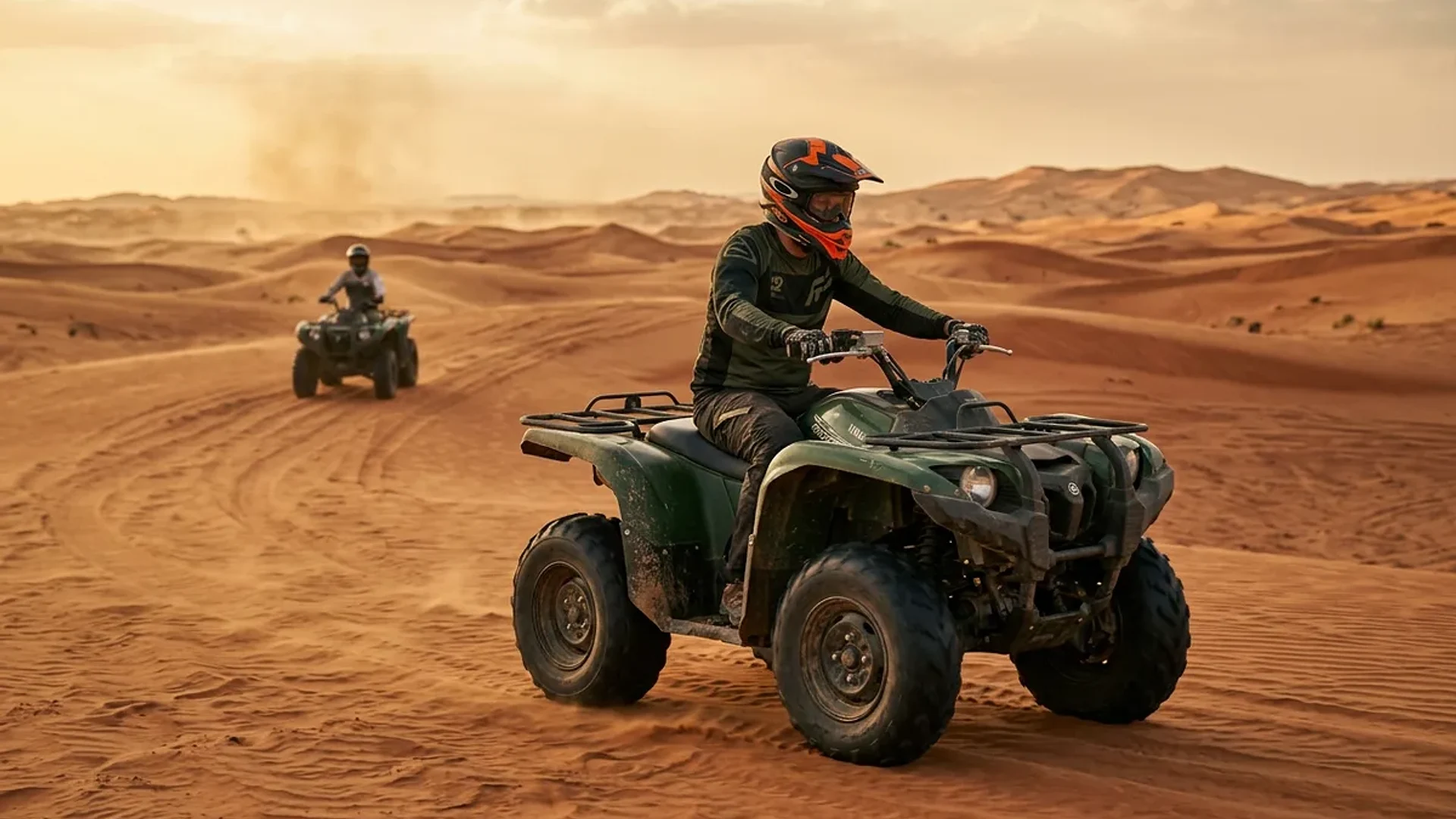
Safety should shape the choice, not sit as an afterthought. A proper safety helmet is basic equipment, and it should fit snugly without rocking or pressing painfully. Protective gear such as gloves, long sleeves and sturdy trousers also helps against dust, branches and accidental scrapes. Closed toe footwear is far better than sandals, and loose scarves or dangling accessories should be avoided.
Ask how briefings are handled. A useful briefing covers throttle control, braking, steering, hand signals, what to do if the group stops and how riders should behave near other vehicles. It should be short enough to remember and clear enough to follow. If instructions are rushed or inconsistent, that is a warning sign.
Route rules deserve attention as well. Respect for speed limits protects riders and keeps the experience enjoyable for everyone. A route with tight turns, dunes or nearby traffic should be managed carefully. If the operator cannot explain how the route is supervised, how the group stays together and what happens if someone gets stuck, keep looking.
Mechanical condition matters too. Tyres, brakes, lights, mirrors and controls should be checked as part of normal preparation. A rider does not need to inspect every component, but visible neglect is hard to miss. Flat looking tyres, worn straps, cracked plastic or a loose handlebar should raise concerns. Mechanical faults are not something to repair informally in the desert, and any persistent warning sign belongs with a qualified professional.
Read the route and timing carefully
The desert changes through the day. Morning light can make the sand easier to read, while late afternoon brings longer shadows and a different feel. Heat also affects comfort, hydration and concentration. A ride that sounds appealing on paper may be less enjoyable if it runs during the hottest part of the day with little shade or pause.
Distance and duration should be understood in context. A short ride over gentle ground may suit a beginner better than a longer ride that includes dune bashing and fast transitions. Ask whether the route includes stops, photo points or water breaks, and whether the pace stays steady or varies widely. The best choice is the one that matches attention span as well as skill.
It also helps to know how the route handles less experienced riders. A good plan avoids forcing everyone to copy the fastest driver. It gives space for cautious turns, allows gaps to close naturally and keeps communication simple. If the route depends on riders taking risks to keep up, it is not the right setting for a relaxed day.
Ask the questions that reveal quality
Before booking, ask a few direct questions. The answers should be specific and easy to understand. Vague replies about fun, adventure or unlimited sand are not enough.
- Which bike size suits a rider with my experience and build?
- What safety gear is provided, and what should I bring?
- Is the route mainly open ground, dunes or a mix of both?
- How is the group managed if riders have different abilities?
- What happens if weather or sand conditions change?
Listen for balanced answers. A provider who talks only about speed may be less attentive to safety. One who asks about rider experience and explains the route in plain language is more likely to make sensible recommendations. Clear communication before the ride often reflects clear communication during the ride.
Weather flexibility is worth checking. Wind can blow sand across the route, and recent tracks can change the surface. Conditions do not need to be perfect, but the ride should be adjusted when visibility or traction is poor. A responsible plan leaves room for caution rather than pushing ahead at any cost.
Make the final choice with a calm head
Once the basics are clear, compare options on fit rather than excitement alone. The right bike should feel manageable before departure. The route should match the group's skill and comfort. The safety setup should be obvious, not promised in vague terms. When those pieces line up, the ride has a much better chance of feeling smooth and rewarding.
For a first booking, a shorter ride with a guided format is often the easiest route into the activity. It gives the rider a feel for the desert, the machine and the pace without asking for too much at once. After that, it becomes simpler to judge whether a longer route, a more technical path or a different bike makes sense next time.
Good quad riding is not about looking fearless. It is about making careful choices, staying within your ability and reading the ground as it changes. Pick the experience that supports those habits, and the desert becomes far easier to enjoy.